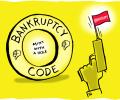
As much as 60 per cent of all resolution plans under Insolvency and Bankruptcy Code (IBC) were approved in the last three years alone, with over 30,000 cases having an underlying default of Rs 13.8 trillion getting settled even before admission, according to data till December 2024 released by the Insolvency and Bankruptcy Board of India (IBBI).
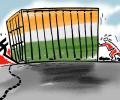
'We believe that in the new world order FTAs or bilateral trade agreements (BTAs) are the way forward.' 'They are enablers for our participation in global value chains. Today, around 70 per cent of global trade is tied to these chains.'

A decline in the initiation of the corporate insolvency process last year is spurring most Big Four firms to rethink and rejig their insolvency verticals to focus on business beyond Insolvency and Bankruptcy Code (IBC), industry experts said. Between the June and December quarter of FY25, the number of insolvency applications initiated by financial creditors went down from 150 to 84.

The prospect of protracted uncertainties in the global economic landscape not only pose a risk for India's growth outlook in 2025-26, but are also likely to dent the private sector's capital raising and investment plans, the finance ministry averred on Tuesday, cautioning the country's corporates that the era of 'easy pickings' was over.

The government is considering initiating a probe by the Serious Fraud Investigation Office (SFIO) against Gensol Engineering and its promoters, according to sources familiar with the matter. "It is under consideration at this stage. A final decision will be taken soon," a government official said.

Algorithmic management (AM) in India has led to a decline in job quality, with "clear" evidence of increased monitoring, surveillance and work intensity, noted International Labour Organisation (ILO) in its latest report.

Geopolitical tensions, trade policy uncertainties, volatility in international commodity prices and financial market uncertainties pose considerable risks to India's economic growth in the coming year, the finance ministry cautioned on Wednesday. "Global trade continues to be affected by uncertainty in the policy environment... tariff-related developments in multiple countries have heightened trade-related risks, affecting investment and trade flows globally.

Of the 823,000 new subscribers in January, the share of young people (18 to 25 age group) declined to 57.07% (470,000) from 57.28% (485,066) in the preceding month.
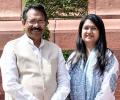
'Indian players in the digital market should not be dominated by global players, and they should not dominate the smaller players -- these discussions are on.'

After declining to a three-year low in FY24, the private sector investment is expected to fall further in the current financial year, India Ratings said in a research note.. The investments in the private sector are likely to plummet to below 11 per cent of the GDP in FY25, based on the trends from the latest national accounts data and company fillings, it noted.
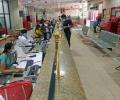
Women on an average gave 10 minutes more to "employment-related activities" and spent 7 minutes less on "unpaid domestic services for household members" per day in 2024 against what they did five years ago in 2019.

The Pradhan Mantri Awas Yojana-Grameen has the highest unutilised amount (Rs 13,111 crore) compared to any other centrally sponsored scheme.
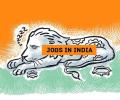
Unemployment rate in urban areas during the third quarter (October-December) of FY25 remained unchanged at 6.4 per cent compared to the preceding quarter, according to the latest quarterly Periodic Labour Force Survey (PLFS) data released by the Ministry of Statistics on Tuesday. While the unemployment rate for men worsened marginally to 5.8 per cent in Q3 from 5.7 per cent in Q2, for women, it improved to 8.1 per cent from 8.4 per cent.
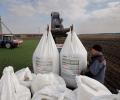
For the first time, the government is likely to dip into the Oil Industry Development Fund (OIDF) to finance part of its fertiliser subsidy programme for 2025-26, according to official sources. The finance ministry has accounted for Rs 23,000 crore in the FY26 Budget as net additional resources to be drawn from dedicated reserve funds, including the OIDF, the Agriculture Infrastructure and Development Fund, and the Universal Service Obligation Fund.

The interest rate on these schemes have remained unchanged for over a year now.

'We are getting to understand the mind of this generation.' 'Minor tweaks are being made to ease the process as we go along.'

'Spend, but create assets, spend but make sure that people benefit from it.' 'This has been a beautiful guiding principle. And I think as a finance minister I owe so much to the prime minister for keeping this path clear before us.'
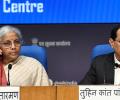
'Our attempt to honour the taxpayer has been since 2014 and more actively since 2019-2020 onwards.'
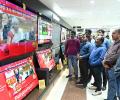
'Nearly 10 million people will benefit from the increase in the rebate limit for those earning up to Rs 12 lakh.' 'We expect all that money will come back into the economy in either savings, consumption, or investments.'

This will be the first full-year Budget of the BJP-led National Democratic Alliance government since it came to power for a third consecutive term in July last year.
 © 2026 Rediff.com - Advertise with us - Disclaimer - Privacy Policy - Sitemap - Feedback - About us - Terms of use - Grievances